How to Become a Plumber in the UK – Is It Ever Too Late to Learn a Trade
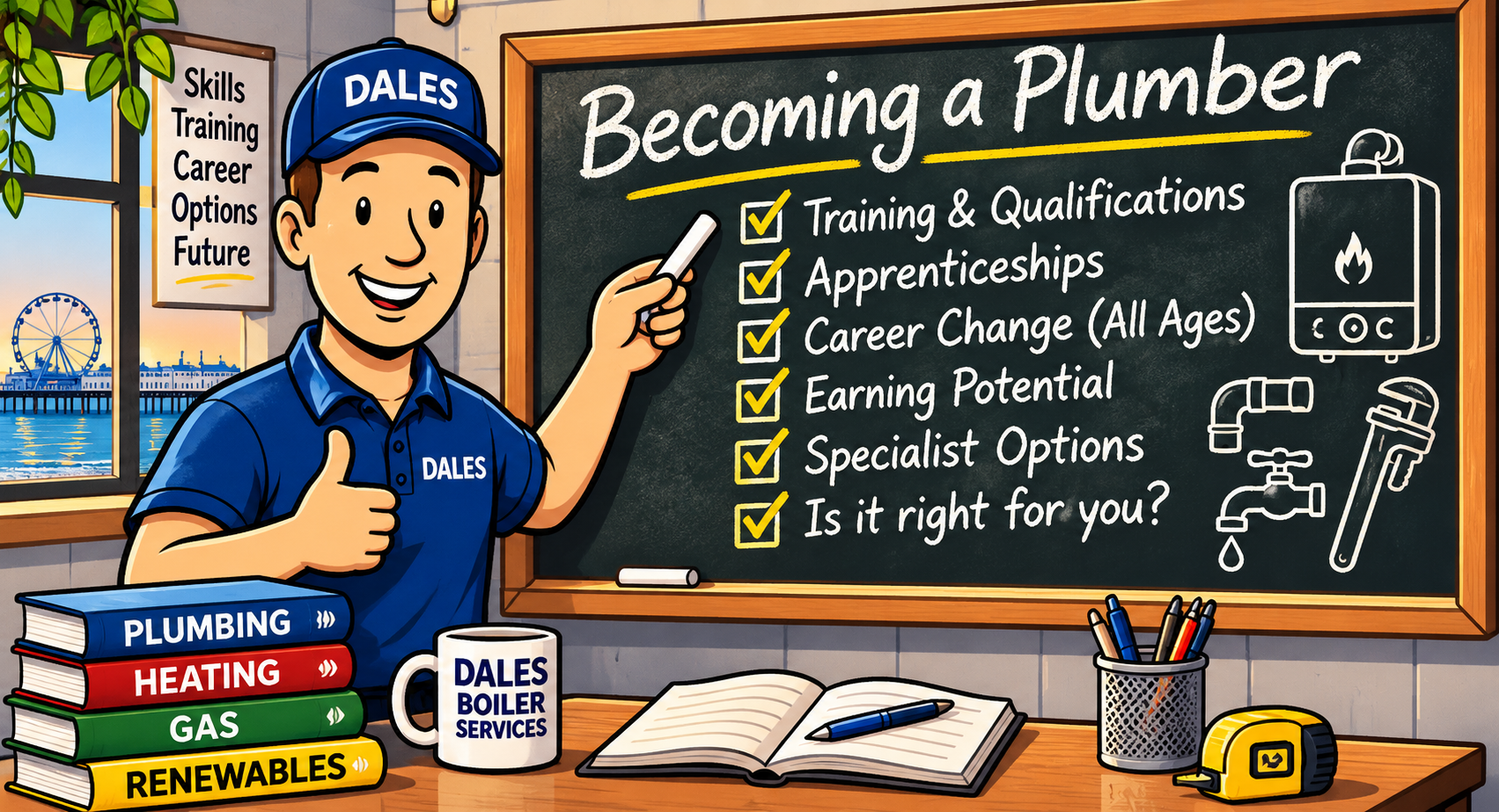
Thinking about a plumbing career? Here’s how UK training routes, apprenticeships, qualifications and gas work fit together, whether you’re 16 or changing career later.
How to Become a Plumber in the UK – Is It Ever Too Late to Learn a Trade?
Whether you’re leaving school at 16 or considering a complete career change at 45, becoming a plumber could be one of the best decisions you ever make.
Plumbing is a skilled, rewarding profession that offers variety, earning potential, independence and opportunities to specialise.
After all, artificial intelligence might be able to write an essay, but it’s going to struggle to change a leaking stopcock under your kitchen sink!
At Dales Boiler Services, we’ve put together this guide to explain how to become a plumber, what qualifications you need and what you can realistically expect from a career in the plumbing and heating industry.
What Does a Plumber Actually Do?
Plumbing involves considerably more than fixing dripping taps and unblocking toilets.
A qualified plumber may work on:
- Bathroom and kitchen installations
- Hot and cold water systems
- Central heating systems
- Leak detection and repairs
- Radiator installations
- Hot water cylinders
- Underfloor heating
- Renewable heating technologies
- Domestic and commercial plumbing systems
Every day can be different. One minute you’re installing a beautiful new bathroom, the next you’re lying underneath a kitchen sink wondering why someone installed a cupboard with absolutely no access.
It’s all part of the adventure!
How to Become a Plumber After Leaving School
If you’re a young person considering your career options, a plumbing apprenticeship is one of the best routes into the industry.
A plumbing and domestic heating apprenticeship typically takes around four years and combines practical experience with classroom-based learning.
You’ll learn about:
- Plumbing installation techniques
- Health and safety
- Water regulations
- Heating system design
- Pipework and fittings
- Fault finding
- Customer service
One of the biggest advantages of an apprenticeship is that you earn while you learn, rather than potentially accumulating thousands of pounds in university debt.
You’ll also develop practical skills that will remain useful throughout your life.
Am I Too Old to Become a Plumber?
Absolutely not.
Many people enter the plumbing industry in their 30s, 40s and even 50s.
Perhaps you’re tired of working in an office, looking for greater independence or simply want a career where you can see the results of your hard work.
Mature learners often bring valuable qualities to the trade, including:
- Life experience
- Communication skills
- Reliability
- Problem-solving abilities
- Self-discipline
- Experience dealing with customers
Adult plumbing courses are available through colleges and specialist training centres, with some offering flexible or part-time learning.
However, it’s important to understand that completing a short plumbing course doesn’t automatically make you an experienced plumber.
Qualifications provide the foundation. Practical experience builds the tradesperson.
And remember, age is rarely the biggest problem in plumbing. It’s getting back up after spending an hour underneath a bath!
What Qualifications Do You Need to Become a Plumber?
In England, common training routes include:
- Level 2 Diploma in Plumbing Studies
- Level 3 plumbing and domestic heating qualifications
- Level 3 Plumbing and Domestic Heating Technician Apprenticeship
- Work-based competency qualifications
When choosing a training provider, check that the qualifications are recognised within the industry and that the course offers a realistic route towards demonstrating practical competence.
Be cautious of courses promising to turn you into a fully qualified, highly experienced plumber in just a few weeks.
Learning how to join two pieces of copper pipe is relatively straightforward. Knowing why a heating system isn’t working when everything appears to be working is another matter entirely.
How Much Can a Plumber Earn in the UK?
Plumbing can offer excellent earning potential, particularly as you gain experience and specialist qualifications.
Indicative annual earnings might include:
Experience Potential annual earnings Apprentice plumber £15,000–£25,000 Newly qualified plumber £25,000–£32,000 Experienced plumber £32,000–£45,000 Specialist heating engineer £40,000–£55,000+
Apprentice wages vary considerably by age, apprenticeship year and employer. Self-employed plumbers may generate significantly higher turnover, although business expenses, insurance, tools, vehicles, holidays and taxation must all be considered.
Charging £80 an hour doesn’t mean you’re earning £80 an hour.
Unfortunately, the taxman, the van and the tool suppliers all want to be your friends.
Becoming a Gas and Heating Engineer
Many plumbers eventually choose to specialise in heating and gas engineering.
This can open up opportunities in:
- Boiler installations
- Boiler servicing and repairs
- Central heating diagnostics
- Landlord gas safety inspections
- Energy-efficient heating systems
To legally undertake domestic gas work, you must hold the appropriate gas qualifications and work through a Gas Safe registered business.
Plumbing qualifications alone do not permit you to work on gas appliances.
Gas engineering requires additional training, practical experience, assessments and ongoing competence.
Is Plumbing a Future-Proof Career?
The plumbing and heating industry is constantly evolving.
Modern plumbers and heating engineers are increasingly working with technologies such as:
- Air source heat pumps
- Smart heating controls
- Low-temperature heating systems
- Energy-efficient hot water systems
- Water-saving technologies
- Renewable energy installations
As the UK continues to improve the energy efficiency of its homes, skilled tradespeople will have opportunities to develop new areas of expertise.
Technology will change how plumbers work, but people will always need running water, functioning bathrooms and warm homes.
The Advantages of Becoming a Plumber
There are plenty of reasons to consider a career in plumbing:
- Good long-term earning potential
- Opportunities for self-employment
- A practical and varied working environment
- Transferable skills
- Opportunities to specialise
- The satisfaction of solving real problems
- Skills that are useful in your own home
There’s also something particularly rewarding about restoring someone’s heating on a freezing winter’s day.
You can arrive as a complete stranger and leave as the most popular person in the house.
The Challenges of Being a Plumber
Like every profession, plumbing has its challenges.
You may experience physically demanding work, awkward spaces, unexpected problems, difficult customers and occasional emergency callouts.
You’ll also need to invest in tools, training and keeping your knowledge up to date.
Patience is essential, particularly when a customer tells you:
“It was working perfectly before I tried to fix it myself.”
These words rarely lead to a straightforward afternoon.
Can You Become a Self-Employed Plumber?
Many experienced plumbers eventually establish their own businesses.
Being self-employed can provide greater independence, flexibility and control over your career.
However, running a plumbing business requires more than technical ability. You’ll also need to understand customer service, marketing, quotations, invoicing, insurance, bookkeeping and business management.
Building a good reputation takes time, and reliability is often just as important as technical skill.
Turning up when you say you will, communicating clearly and taking pride in your workmanship can make a tremendous difference.
Where Should You Start?
If you’re interested in becoming a plumber, consider the following steps:
- Research recognised plumbing qualifications.
- Contact local colleges and accredited training providers.
- Explore apprenticeship opportunities.
- Speak to experienced plumbers about the realities of the trade.
- Gain as much supervised practical experience as possible.
- Consider specialist qualifications as your experience develops.
For anyone living in Brighton, Hove, Worthing or elsewhere in Sussex, local further education colleges and specialist training centres are a good starting point.
You can also explore apprenticeship opportunities through the GOV.UK Find an Apprenticeship service.
Final Thoughts from Dales Boiler Services
With over 25 years of experience in the plumbing and heating industry, we understand that becoming a good tradesperson takes time, dedication and a willingness to keep learning.
Whether you’re 16 and deciding what to do with your future or 50 and looking for a fresh start, plumbing is a career worth considering.
You don’t need to know everything on your first day. Even experienced engineers encounter new challenges and learn new things.
Take pride in your work, be reliable, treat customers fairly and never stop developing your skills.
A good trade can provide you with a career for life.
And one final piece of advice from an experienced plumber:
Always know where the stopcock is before you start!
⸻
Dales Boiler Services – Professional plumbing, boiler and heating services across Brighton, Hove, Worthing and Sussex.